Buying a food truck for the first time is less about making a single big decision and more about making dozens of smaller ones in the right order.
Equipment, layout, materials, permits, branding — each of those choices affects the others, and the sequence matters.
We’ve worked with first-time operators across the country, and the ones who launch smoothly are almost always the ones who planned before they purchased.
This guide walks through what every new buyer needs to understand before signing anything.
Key Takeaways
- New food trucks typically cost between $45,000 and $150,000+; food trailers often offer comparable functionality at a lower entry price
- Your menu determines your layout – not the other way around
- Health code compliance is built into the truck during fabrication, not added later; your builder needs to understand this from day one
- Permits, commissary fees, and parking regulations vary by city and must be researched before launch
- Materials quality directly affects durability, resale value, and inspection outcomes
- Branding is part of the vehicle’s function – a wrap that reads well from 50 feet away is a customer acquisition tool
1. Set Your Budget and Understand All Costs
Before looking at any unit, establish a working budget that accounts for more than just the truck itself.
A brand-new, fully equipped food truck runs anywhere from $45,000 to well over $150,000, depending on the level of customization, the equipment package, and the materials used.
A custom food trailer can often deliver similar workspace at a lower upfront cost, which makes it a practical starting point for many first-time operators.
The truck purchase is only one line item. Budget realistically for:
- Permits and business licenses (city and county requirements vary)
- Commissary fees, which are required in most markets
- Commercial vehicle insurance
- Initial inventory and supplies
- Marketing and branding
- Fuel and routine maintenance
The instinct to find the cheapest option is understandable, but it usually costs more in the long run. Low-cost builds tend to use thinner materials, underpowered ventilation, or equipment that won’t hold up to daily service. Inspectors notice. So do customers, even if they can’t articulate why.
Learn More: How to Obtain a License for Your Food Truck Business: A Step-by-Step Guide
2. Choose the Right Type of Unit
The choice between a food truck and a food trailer is more operational than it might seem.
Trucks give you full mobility – pull up, set up, and move on without a separate towing vehicle. Trailers typically offer more interior square footage for the same price point, which matters if your concept requires multiple stations or a larger prep area.
Think through how you’ll actually operate day to day. If you’re moving between several locations across a metro area, a truck may serve you better. If you’ll anchor at a fixed lot or event space and haul with a vehicle you already own, a trailer often makes more financial sense.
Our post on food trucks vs. food trailers breaks down the tradeoffs in more detail if you’re still weighing the two.
3. Design Your Menu and Layout Together
Your menu should be finalized – or at least narrowed down – before you finalize the layout.
The two are directly connected. A burger concept needs a flat-top grill, a fryer, and meaningful prep surface. A smoothie or cold-press program needs refrigeration, blender stations, and minimal cooking equipment.
Getting the layout right means knowing what’s going into it.
If you’re still working through your concept, our roundup of food truck menu ideas is a useful starting point. We also work with clients to design equipment layouts that minimize movement during service – in a tight space, the distance between a prep station and a cooking surface adds up over hundreds of orders.
4. Select a Builder You Can Verify
Not every fabricator operates to the same standard, and the gap between a well-built unit and a poorly built one usually shows up during inspection – or worse, during a busy service when something fails.
Work with a builder who has verifiable experience, uses commercial-grade materials, and designs to your local health department’s specifications from the start.
Our custom food truck and trailers include turnkey builds from design through delivery, custom fabrication to fit your concept and equipment list, ADA and health code compliance integrated into the design, and commercial ventilation and fire suppression systems.
Getting compliance right in the build saves time and money at the permit stage. Retrofitting a truck that wasn’t built to code is expensive and sometimes not feasible without significant rework.
For a useful checklist of what to ask before you commit to a builder, see our post on questions to ask food truck manufacturers.
5. Think Through Location and Logistics Early
Where you plan to operate shapes what you need in the truck itself.
Operators in hotter climates deal with sustained heat that can make an under-ventilated kitchen genuinely dangerous for staff – proper HVAC and exhaust systems aren’t optional in those conditions.
In markets with stricter emissions standards, solar and low-draw electrical systems are increasingly worth considering at the build stage rather than retrofitting later.
Beyond climate, understand the parking rules in your target market. Most cities have specific regulations about where food trucks can operate, how long they can occupy a spot, and what commissary arrangements are required.
Our guide on where you can park a food truck overnight covers the most common rules and what varies by jurisdiction.
6. Invest in Quality Materials
The interior of a food truck takes a beating. Surfaces are cleaned multiple times a day with commercial sanitizers. Equipment vibrates during transport. Temperature swings between service and storage are significant.
A truck built with thin-gauge steel, low-grade flooring, or consumer-grade equipment will show wear quickly and is more likely to fail inspection as materials degrade.
Our builds use commercial-grade stainless steel, aluminum framing, and reinforced flooring designed for the specific demands of mobile food service. These material choices affect durability, but they also affect resale value if you decide to upgrade or sell down the line.
For a deeper look at what equipment actually belongs in a well-built unit, our post on food truck equipment must-haves covers the essentials.
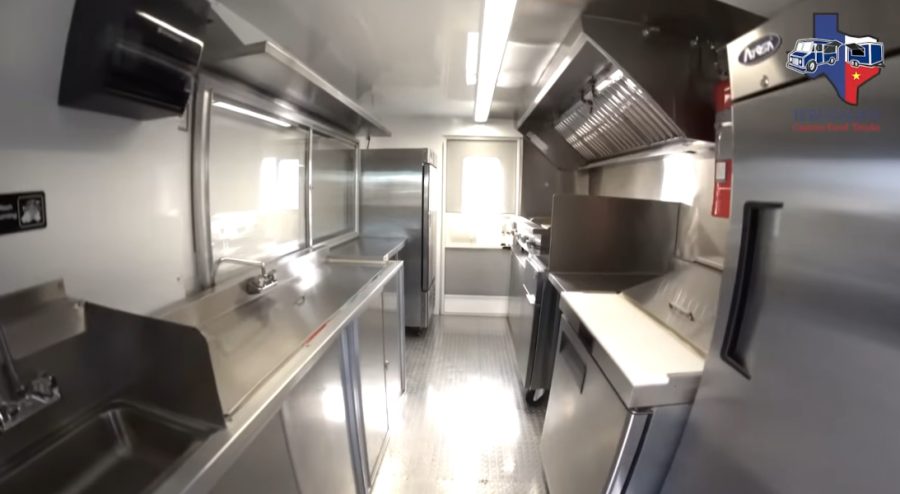
7. Plan for Storage and Space Efficiency
Available square footage in a food truck is finite, and how you use vertical and under-counter space determines how smoothly service runs.
Shelving positioned for reach-in access during service is different from shelving organized for end-of-day restocking. Prep counter placement affects how many people can work at once without colliding.
Think through a full service shift before you finalize the interior plan. Where does food come in? Where does trash go? Where are clean and dirty surfaces separated? These questions are easier to answer during design than after the unit is built.
8. Branding Is Part of the Truck’s Function
A food truck operates in public. People make purchase decisions at a glance, often from a moving car or across a parking lot.
A wrap that’s legible, distinctive, and visually consistent with your brand is a direct revenue driver — not a finishing touch. Our post on food truck branding goes into what makes a mobile brand actually work in the field.
We offer full branding packages including vehicle wraps, signage, and menu boards. The goal is a truck that communicates clearly what you’re selling and why someone should stop. That starts with understanding your concept, your customer, and the environments where you’ll operate.
9. Don’t Overlook Permits and Compliance
Every market has a list of things a food truck must have before it can operate, and that list is usually longer than first-time operators expect.
Common requirements include:
- A three-compartment sink for washing, rinsing, and sanitizing
- A dedicated handwashing station, separate from the three-compartment sink
- A commercial fire suppression system over cooking equipment
- Cleanable, non-porous surfaces throughout
We build each unit to meet current health and safety standards in the markets we serve. When a truck is built to code from the beginning, the permitting process moves faster and inspection results are more predictable.
For a broader look at what new operators often get wrong in this area, our post on mistakes new food truck owners make covers the compliance gaps that come up most often.
10. Work With a Builder Who Stays Involved
The relationship with your builder shouldn’t end at delivery. Questions come up after you start operating – about equipment, about modifications, about what an inspector flagged and how to address it.
We’ve built for operators across the United States and in international markets, which means we’ve encountered a wide range of regulatory environments and operational scenarios.
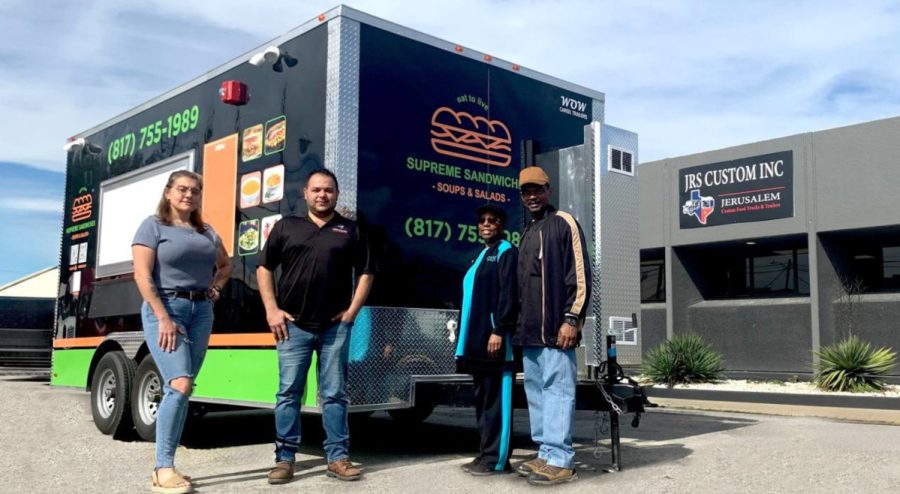
You can see examples of completed builds in our build gallery, or walk through our build process step by step if you want to understand how a project moves from concept to delivery.

Conclusion
Buying a food truck is a business decision before it’s a culinary one. The operators who set up for success get the budget, layout, materials, and compliance picture right before they start serving.
If you’re working through any of these decisions, contact our team and we’ll help you figure out what your build actually needs.
 Proudly built in America