

Buying a custom food truck is not a small decision. You’re committing tens of thousands of dollars to a working kitchen that needs to pass health inspections, operate daily in high heat, and hold up on the road – sometimes for years.
The builder you choose determines how well that truck performs from the first day of service.
The problem is that most buyers come into the process without a clear framework for evaluating builders. The conversations can feel productive even when the important questions never come up. This guide is meant to fix that.
Key Takeaways
- Ask specifically how long a builder has been fabricating food trucks – not vehicles in general
- Customization should go deeper than aesthetics; layout and workflow design matter just as much as the wrap
- Material choices directly affect your ability to pass health inspections and avoid costly repairs
- A good builder will either assist with permits or clearly explain what you need to handle yourself
- Financing terms and delivery logistics should be confirmed in writing before any deposit changes hands
1. How Long Have You Been Building Food Trucks Specifically?
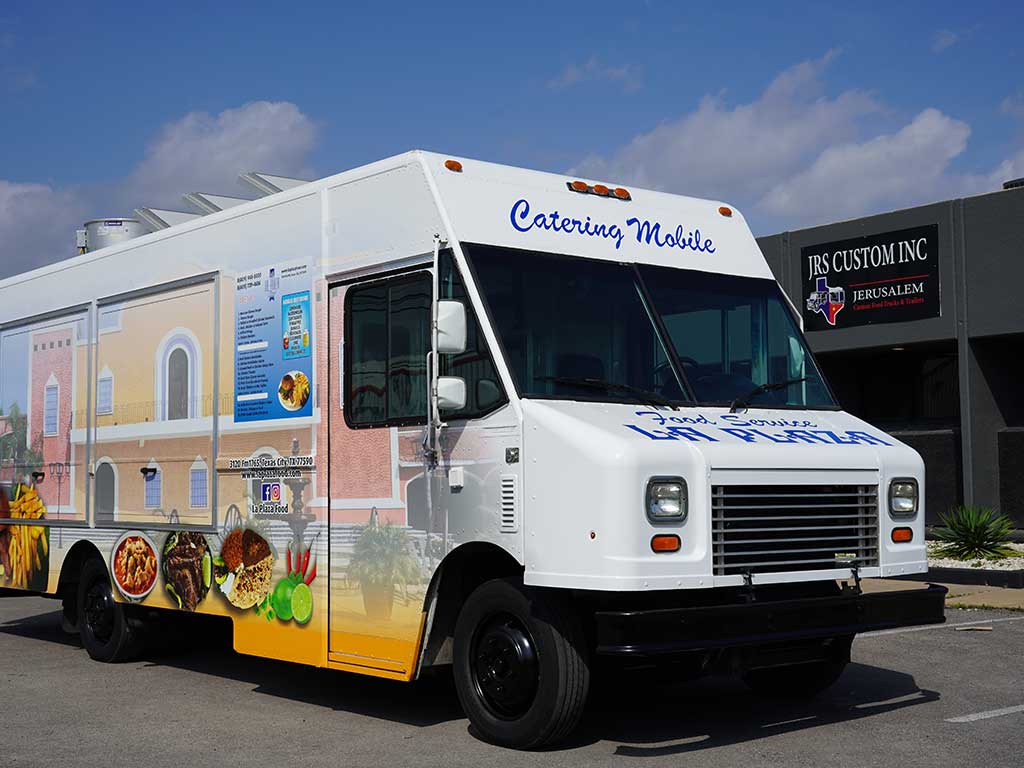
General fabrication experience doesn’t automatically translate to food truck expertise. A shop that builds trailers, storage containers, and horse haulers on rotation hasn’t necessarily absorbed the code requirements, spatial constraints, and workflow logic that make a food truck functional as a commercial kitchen.
When you ask this question, press past years in business and ask about volume.
- How many food trucks have they completed?
- Can they walk you through the range of concepts they’ve built and explain how those builds differed from one another?
A builder with real depth in this category will have that answer ready, because they’ve solved those problems before.
References matter here too. Ask if you can contact past clients, and specifically ask those clients whether the finished truck passed its initial health inspection without requiring modifications.
2. Can You Customize the Build Around My Specific Menu and Workflow?
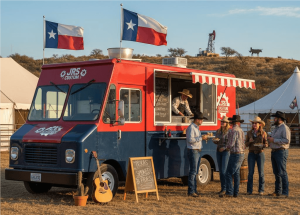
The word “custom” gets used loosely in this industry. Some builders customize in the cosmetic sense – colors, wraps, signage – while the kitchen layout follows a standard template regardless of what you’re cooking. That gap between appearance and function is where a lot of operators run into trouble.
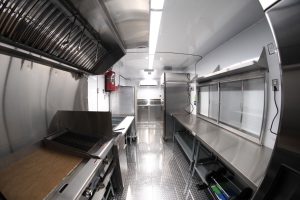
A high-volume taco operation needs a very different workspace than a coffee trailer or a burger truck. The position of the cooking line, the cold storage configuration, the ventilation, the placement of the service window – these aren’t afterthoughts. They determine how many tickets your crew can turn during a lunch rush.
Before you commit:
- Ask to see how the builder has adapted layouts for different food types.
- Ask whether they’ll work through your menu and operational flow before finalizing the floorplan, not after.
If a builder isn’t asking those questions early, the customization is likely surface-level.
3. What Materials and Equipment Do You Use?
This question tends to produce vague answers from builders cutting corners. Push for specifics.
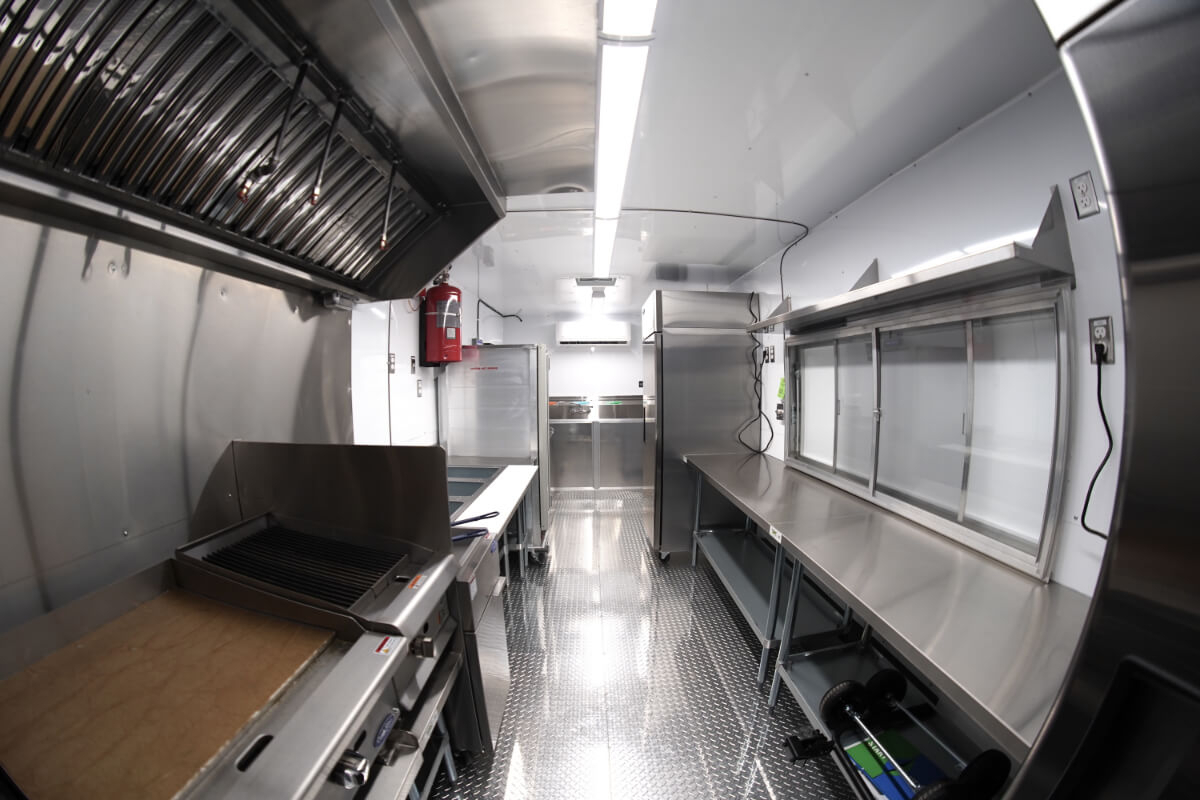
For the structure and kitchen surfaces, ask about:
- Whether interior walls and work surfaces are NSF-certified stainless steel
- The gauge of steel used in the frame and exterior
- Flooring material – non-slip, commercial-grade surfaces are required in most jurisdictions; wood or aluminum tread plate are red flags
- Insulation type and R-value, which affects both temperature control and fire resistance
- Whether the plumbing is correctly sized with dedicated hot and cold tanks that meet local health code minimums
For equipment, ask which brands they install and whether those units are commercial-grade. Residential appliances – even high-end ones – are not permitted under most food truck health codes and will fail inspection.
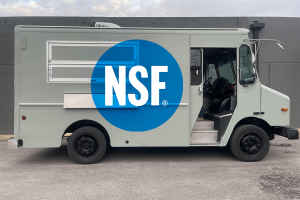
The NSF certification that applies to food service equipment is a useful baseline here. If a builder isn’t familiar with it, or can’t confirm their equipment meets those standards, that’s worth noting.
A truck built with quality materials costs more upfront. It also costs significantly less over five years of daily operation, when the alternative is sourcing replacement parts for undersized or non-standard components.
4. Do You Offer Any Guidance on Permits and Licensing?
Permits for mobile food operations vary by city and county. What you need in Houston is not the same as what you need in Austin or Los Angeles.
Some jurisdictions require the truck itself to pass a commissary inspection before you can even operate. Others have specific rules around propane capacity, generator placement, or grease trap requirements that affect how the truck needs to be built in the first place.
A builder with genuine experience in this space will know what the common requirements are in the markets they serve and will build to meet them proactively – not reactively after a failed inspection.
This doesn’t mean your builder becomes your permit consultant. That’s a different role. But they should be able to explain which aspects of the build are code-sensitive, flag anything that varies by state or city, and provide the documentation you’ll need to submit during the approval process.
If a builder hands you a finished truck without ever mentioning permits or inspections, that’s a gap in the process that will likely cost you time after delivery.
Every build we complete at JRS is designed to meet health and safety codes – and we walk clients through the documentation they’ll need to take to their local health department and fire marshal.
Learn More: How to Obtain a License for Your Food Truck Business: A Step-by-Step Guide
5. What Are Your Financing Options and How Does Delivery Work?
Most custom food trucks are financed, and the terms vary considerably between builders. Some work with third-party lenders. A few offer in-house financing. Some require full payment upfront.
Before you sign anything, clarify:
- What percentage is required as a deposit
- The payment schedule during the build
- Whether any financing is available through the builder or lender partners they can refer you to
- What happens if the build timeline extends beyond the agreed date
Delivery is a separate but equally important conversation. Most operators ordering from a builder outside their state will receive the truck via transport rather than driving it home.
Confirm who arranges the transport, who bears the risk during shipping, and what the inspection process looks like at delivery. Damage that isn’t documented at pickup becomes your problem once the truck leaves the builder’s lot.
We deliver custom food trailers and trucks across the U.S., and we handle the shipping logistics so operators aren’t navigating that process alone. Before any build begins, we make the full process – deposit, build timeline, delivery – clear in writing.
A Note on Red Flags
A few patterns tend to show up with builders that should give you pause:
- Reluctance to share references from past clients
- Vague or incomplete answers about materials and equipment brands
- No mention of health codes or permits during the sales conversation
- Timelines that seem too fast to be realistic for a full custom build
- Pricing that is significantly below market without a clear explanation of what’s included
A reliable builder wants you to ask hard questions. They’ve answered them before, and the answers hold up under scrutiny.
Conclusion
The five questions above don’t guarantee a perfect build, but they do give you a reliable way to distinguish a prepared, experienced builder from one that isn’t.
If you’re working through this process and want to understand more about how a custom build is designed and laid out, our guide on designing your custom food truck walks through the planning decisions in detail.
You can also request a quote to start a direct conversation with our team about your specific build.