

Your customers are the biggest marketing channel you have, and the only one you cannot buy.
In over a decade of building trucks for operators across the country, one pattern holds steady. The trucks that keep a line moving all share three things: sharp branding, food worth describing, and people who work the window like someone might film it.
Key Takeaways
- Customers spread your name in person and on their own accounts, which makes the truck, the food, and the service the base every other tactic sits on.
- People see the truck before they read anything about you, so a readable wrap markets for you all day at no ongoing cost.
- Service is the part of the day you control most, and the part most likely to become the story a customer tells.
- Instagram carries food truck word of mouth better than any other platform, because the product is visual and the audience is local.
- Reviews and reels move both ways, and a bad one travels further than a good one.
- Recovering from bad publicity depends on fixing the real problem and responding directly, including reaching out to the person who posted.
Great Branding and Great Food Do Your First Round of Marketing
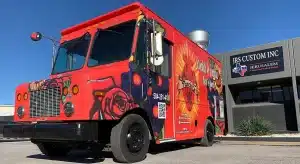
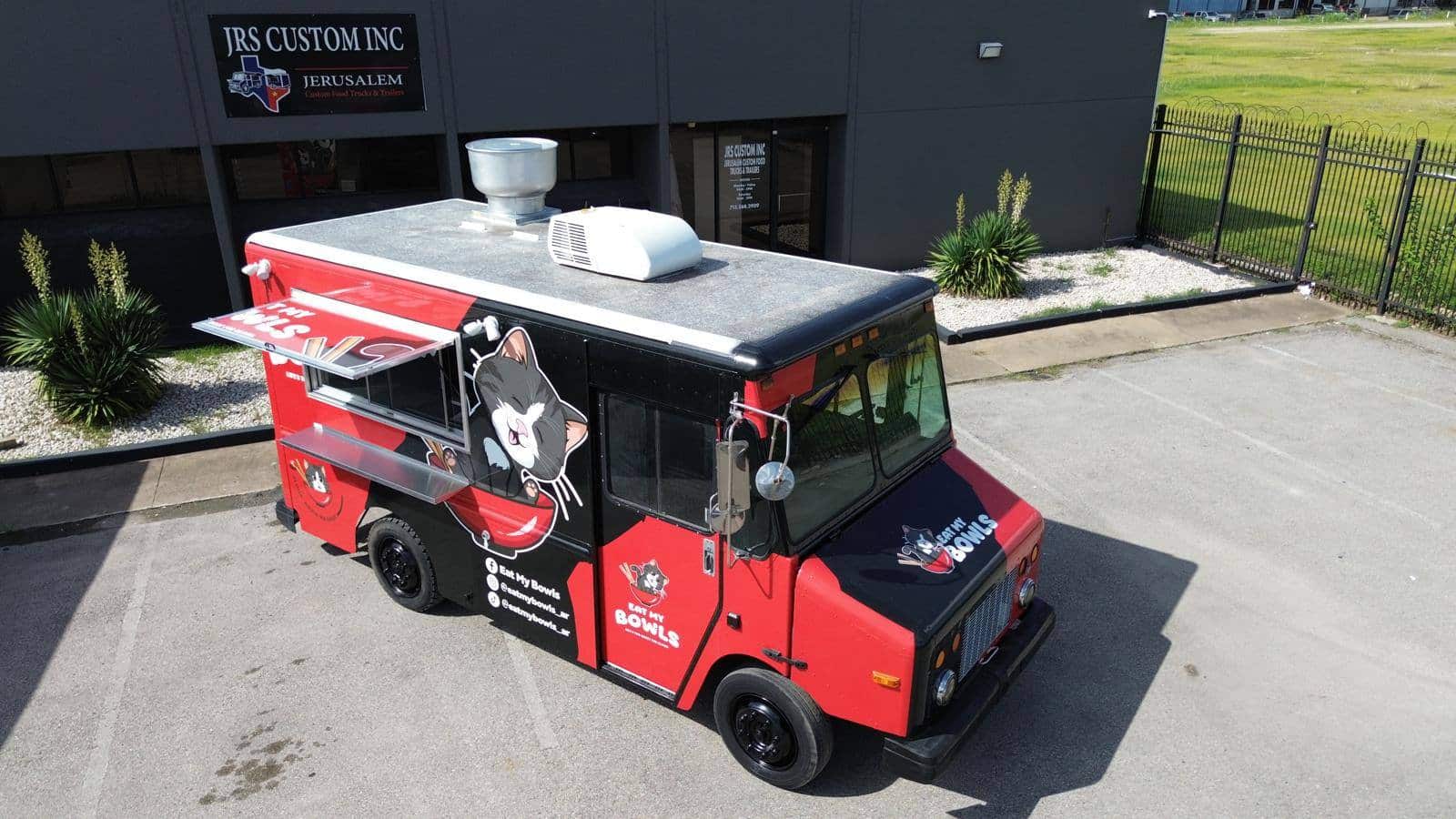
Chances are no one is going to read about your food truck before they see it. The truck is your first impression, and the food decides whether that impression gets repeated. No ad budget makes up for a weak version of either.
Branding is about being readable before it is about being stylish.
Your name, logo, or food should register on someone walking past at forty feet. One designed at full size on a screen but unreadable across a parking lot fails at its only job.
The name matters more than most owners expect, because a customer has to repeat it.
They say it to a coworker or type it into a search bar hours later. A name that is hard to spell, hard to recall, or shared with three other trucks adds friction to every recommendation you earn.
Food quality carries more weight for a truck than for a restaurant.
A restaurant leans on its dining room, its lighting, and the table to carry an average plate. A truck has none of that cover, so the food is nearly the entire product.
A short menu you cook the same way every shift beats a long one you cook unevenly. Being known for one dish gives people a reason to seek you out, and it keeps your prep and your line fast.
Our roundup of food truck menu ideas covers building a menu that holds up under a rush.
Great Service Is the Variable You Control Every Shift
Service is the part of the day you control most, and the part most likely to become a story. Your wrap and your recipes are fixed once you open. How your crew treats people at the window is not.
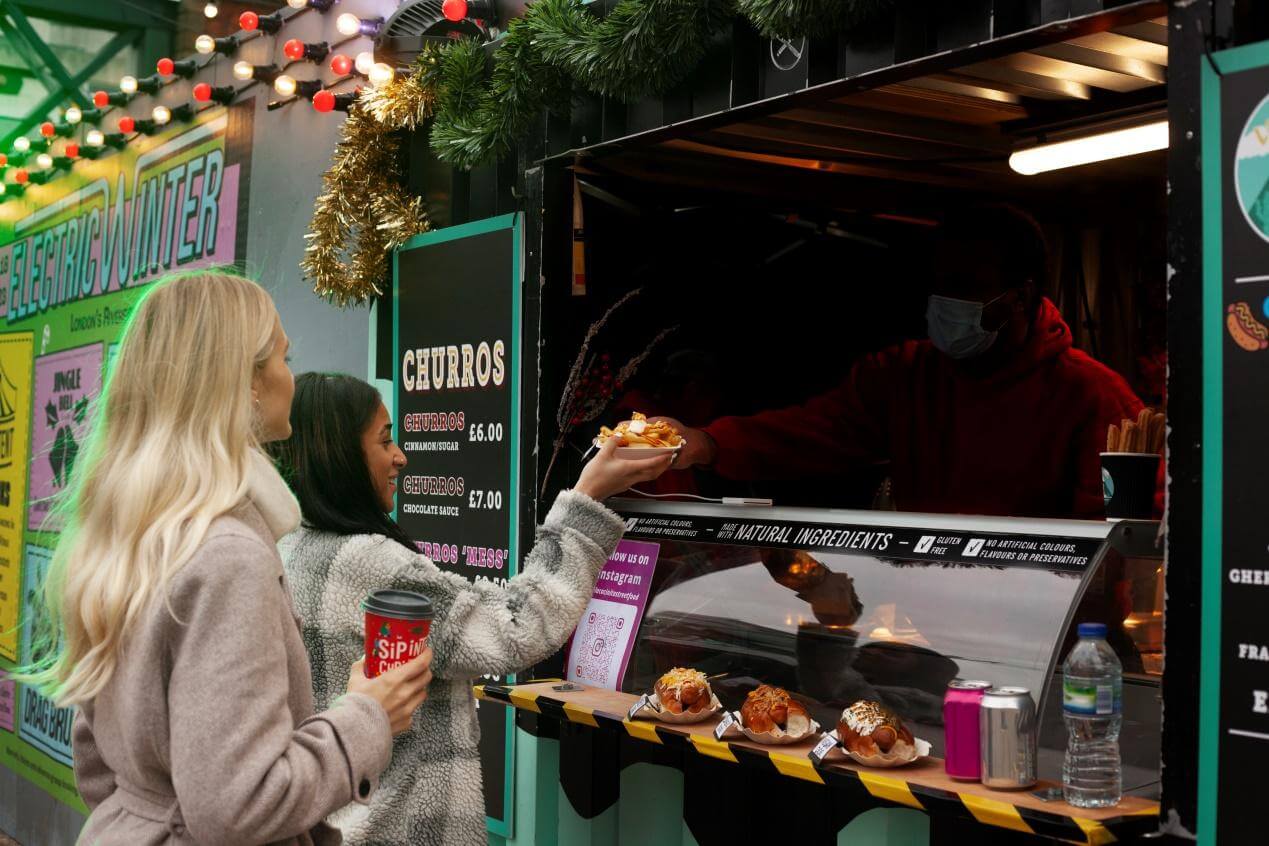
On a truck, the line is the storefront. A customer stuck behind a line that has not moved in ten minutes is judging you before the first bite, and everyone walking past is reading that same line.
A slow, silent window costs you the people in it and the people deciding whether to join.
Much of that speed is built into the truck itself. Where the window sits, how orders and pickups flow, and how far a cook reaches for each ticket sets the pace a crew can hold. Get the layout right and the line keeps moving through the rush that matters most.

Your Customers Are Your Largest Marketing Channel
People who love your food tell friends in person and post it to their own accounts. That distribution reaches further than anything you publish yourself.
A friend’s recommendation carries weight no ad placement can buy, and it costs you nothing but the meal that earned it.
A 2026 study in the British Food Journal found that both influencers and ordinary customers raise a restaurant’s reputation and its repeat visits. The customer voice was the stronger of the two by a clear margin.
Design the Experience So That Sharing Is Easy
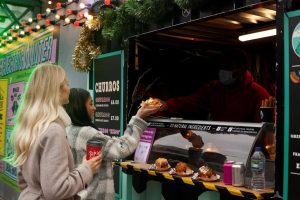
A customer holding a good-looking plate will photograph it. Whether your name lands in the shot depends on choices you made months earlier: your signage, your menu board, your packaging, and the view from their side of the window.
Make your account easy to find and tag. Put the handle on the truck, the menu board, and the packaging. Use one name across every platform so someone who remembers it finds you on the first try.
Then ask. A customer who just enjoyed their meal is the most receptive audience you will ever have, and a direct request to follow or leave a review lands better than any campaign.
Our build gallery shows how window and signage placement change what ends up in frame.
Instagram Is Where Food Truck Word of Mouth Lands
Instagram suits this business better than any other platform, because the product is visual and the audience is local. A customer’s story tagging your location reaches their followers in your city. That is the exact audience you would otherwise pay to reach.
Post steadily rather than in bursts. A regular mix of food shots, the truck in its setting, and the crew keeps you in front of people who will eventually pass you on the street. They know you online before they meet you in person.
Most importantly, repost what customers share. Sharing their story or photo costs nothing and encourages more of it, and their content reads as more credible than your own.
Our guide to using social media and apps to find customers covers these channels in depth.
Reviews Move in Both Directions
The same force that makes word of mouth powerful makes it dangerous. A large share of people now consider themselves influencers, and enough publicity in either direction can make or break a truck.
The damage rarely comes from one bad day. It builds when enough people meet poor service or weak food, and someone shapes it into a reel or a Google review others recognize as their own experience. That version outruns praise and is hard to undo once it has an audience.
Understand the imbalance before you plan around it. A satisfied customer might post once. A frustrated one has motive, an audience ready to engage, and a platform that rewards the conflict.
Recovering From a Bad Review Depends on How You Address the Problem
You can recover from it. In our experience it comes down to fixing what went wrong, not managing how it looks.
The operators who recover do three things:
- Reply to the review in public, directly, without getting defensive. People read the response to judge how you handle a problem.
- Fix what drew the criticism. If several people name the same dish, they are describing it accurately.
- If it fits, reach out to whoever posted the reel or story and invite them back to try it again on the house.
Inviting an unhappy poster back is the step most owners skip, and it works more often than they expect.
Someone who posted a complaint has staked out a public position, and a genuine reason to revise it, in front of the same audience, does more than any reply thread. It can turn a critic into proof that you listen.
None of this holds if the underlying problem stays in place. A reply about a dish you have not changed reads as damage control, and customers recognize it immediately.
Conclusion
Marketing a food truck comes down to a simple order of operations.
Build something people notice, feed them something worth describing, treat them well at the window, and then make it easy for them to spread it. The paid tactics only ever amplify what those four already earn.
If your truck is still on the drawing board, the design stage is the best place to set yourself up for success, and our team can help you plan it when you request a quote.
Frequently Asked Questions
What is the most effective way to market a food truck?
Word of mouth from your customers, earned through the food, the service, and a truck people remember. Paid promotion only amplifies the reputation you already have. In practice that means being excellent at a few dishes and making it easy for happy customers to tag you.
How much does customer service affect a food truck’s reputation?
A great deal. On a truck the window is the entire interaction, and the line is visible to everyone walking past. A slow or indifferent window leaves people talking about the wait instead of the food, while a fast, friendly one brings them back.
How do you recover from bad reviews as a food truck?
Fix the problem first, then respond. Change the dish people call out, address the service issue, and reply to the review in public without getting defensive. If someone posted a reel, inviting them back to try it again on the house can shift the story in front of the same people who saw it.
Which social media platform works best for a food truck?
Instagram, in most cases, because food is visual and customer posts that tag your location reach a local audience. Post to one platform consistently rather than running weak accounts on three. Repost what customers make, since their photos read as more credible than your own.
Does the food truck or the food matter more?
Both, at different stages. The truck decides whether someone notices you and walks over. The food decides whether they mention you to anyone afterward.