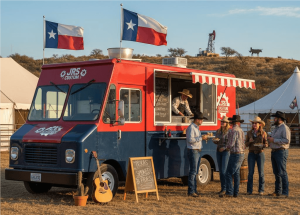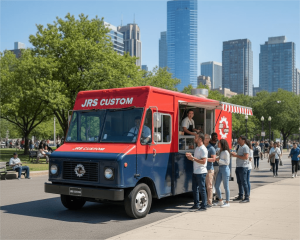


Eco-friendly food trucks lower the two costs that eat into a mobile kitchen’s daily margin: the fuel a generator burns and the water the truck carries and dumps.
Solar, battery power, efficient appliances, and LED lighting all reduce the fuel side, while low-flow faucets and greywater capture cut the water.
How much they save depends on how and where a truck runs, so the same upgrade that transforms one operation barely moves the numbers for another.
Key Takeaways
- Solar and a battery bank cut or replace the gas generator that runs a truck’s electrical system, removing daily fuel spend and constant noise.
- A battery powered food truck can work indoors and at venues that ban gas generators, opening bookings a generator-only truck cannot take.
- Efficient refrigeration, cooking, and LED lighting draw less power, so a smaller generator, battery, or solar array carries the same equipment.
- Low-flow faucets and greywater capture cut the fresh water a truck carries and the wastewater it dumps, which also drops weight.
- Green features pay back over a truck’s service life, fastest for high-volume operators in sunny regions and slowest for gas-cooking trucks tied to shore power.
Why Green Features Matter for a Food Truck’s Bottom Line
A food truck pays for fuel, water, and power every day it operates, and those lines sit near the top of its variable costs.
A gas generator running ten hours burns fuel whether or not the window is busy. Fresh water gets hauled in and greywater hauled out, and refrigeration and cooking pull power across the whole shift.
Green features attack each line at its source:
- Solar and battery power reduce or replace generator fuel
- Efficient appliances lower the load that power has to carry
- Water conservation cuts what the truck hauls in and dumps out
Saving money is not the only reason to go green. Diners increasingly pick vendors whose sustainability is visible, which gives a new operator a real point of difference when it comes time to promote the food truck.
Regulations Are Slowly Pushing Generators Out
Regulation is tightening the market for gas generators, starting in California and spreading from there.
California’s AB 1346 directs the Air Resources Board to phase out new small off-road engines, the category that includes portable generators. Most equipment hit a zero-emission standard for new sales in 2024, and portable generators follow at model year 2028, with tighter limits in the meantime.
The law targets the sale of new equipment, not the use of what you already own, so nothing shuts off overnight. It signals where the market is heading, and manufacturers and buyers are already moving.
5 Eco-Friendly Features That Lower Operating Costs
Each targets a specific recurring cost, and the mix that makes sense depends on how and where the truck works.
1. Solar Power Systems
Roof-mounted solar panels turn daylight into electricity for the truck’s electrical system, which cuts or replaces the fuel a gas generator burns to make that same power. The panels feed a battery through the day so the stored charge is there for evening service.
Solar returns the most in high-sun regions like Texas and California and on trucks that work long daytime hours. The array is a one-time cost set against a fuel bill that never stops, so the payback builds over the truck’s service life rather than in a single season.
A correctly sized system carries refrigeration, lighting, a point-of-sale setup, and light electrical cooking without a generator.
It does not replace a propane cook line, and heavy electric loads like several induction burners at once usually still lean on a battery bank or shore power.
Panels also add weight that affects handling and payload, so the array gets designed into the build rather than bolted on later.
2. Battery Power Systems
A battery power system stores electricity in a lithium battery bank and delivers it silently, so a truck runs its equipment without a gas generator. The bank recharges from the grid overnight, from solar during the day, or from a shore-power hookup between shifts.
The immediate change is what disappears:
- no generator hum over the service window
- no exhaust drifting across the food
For customers and for a crew working next to it all day, that alone changes how the truck feels to stand near.
A battery powered food truck also reaches locations a generator cannot. Event venues, indoor markets, hotels, hospitals, and residential blocks often ban gas generators outright for noise or emissions.
A battery truck takes those bookings while a generator-only truck gets turned away. For an operator working weddings, corporate events, and private parties, that access is often worth more than the fuel it saves.
3. Energy-Efficient Appliances
Energy-efficient refrigerators, grills, and fryers do the same work on less power, which lowers the load the generator, battery, or solar array has to carry.
A lighter load means a smaller, cheaper power system at build time, or more service hours out of the one already installed.
Induction cooktops make the point clearly, using close to a third less energy than standard electric elements to put out the same heat. They also add little ambient heat to the cabin.
Commercial refrigeration is the other steady draw, since it cycles all shift, so units that hold temperature on less continuous power matter most through a long summer day.
4. LED Lighting
LED lighting for the interior, service window, and signage draws a fraction of what older bulbs pull and lasts far longer. On a battery or solar setup, that leaves more capacity for refrigeration and cooking.
LEDs also run cool, which trims the cabin heat that air conditioning has to fight in a tight kitchen, and on an electric build every watt not spent on lighting is a watt free for equipment that actually cooks.
5. Water Conservation Systems
Low-flow faucets and a greywater capture setup cut the fresh water a truck carries and the wastewater it has to offload. That drops both weight and the shift time lost to refilling and dumping. A truck hauls its own fresh and grey tanks, so every gallon not used is weight it is not driving around.
Using less water also stretches how long the truck serves before it has to find a fill-and-dump station, which protects the busiest hours of a shift. It makes staying inside a city’s water and wastewater limits for mobile vendors easier too.
How Eco-Friendly Features Pay Off Over Time
Where the features fit the operation, they return the up-front cost as lower running costs over the years. Generator fuel is the largest recurring line they touch, and solar and battery power cut or remove it outright.
Efficient appliances and LED lighting shrink the power system the truck needs in the first place. Part of the savings is set at the build stage, before the first monthly bill. Water conservation trims weight and the downtime spent refilling and dumping.
Two returns never show up on a utility statement. A battery truck takes indoor and no-generator bookings a gas truck cannot.
Visible sustainability also draws diners who choose vendors on those grounds, the kind of preference that feeds word-of-mouth marketing. For a high-volume operator in a sunny region, those two effects often matter more than the fuel line itself.
Where Green Features Do Not Pay Off
Green features are not a universal win, and pretending otherwise sets an operator up for disappointment..
A truck that cooks mostly on propane and parks at a fixed spot with shore power gets little from solar or a large battery, because the generator it would offset barely runs. The bigger fuel line for a heavy griddle or fryer operation is propane, which none of these features touch.
The other is a low-volume schedule. A truck that works a few short shifts a week takes far longer to earn back the up-front cost of a battery or solar array. That money may do more in equipment that drives revenue. The features pay when a truck runs hard, runs long, and runs where a generator is a liability.
How JRS Builds Green Features Into a Custom Truck
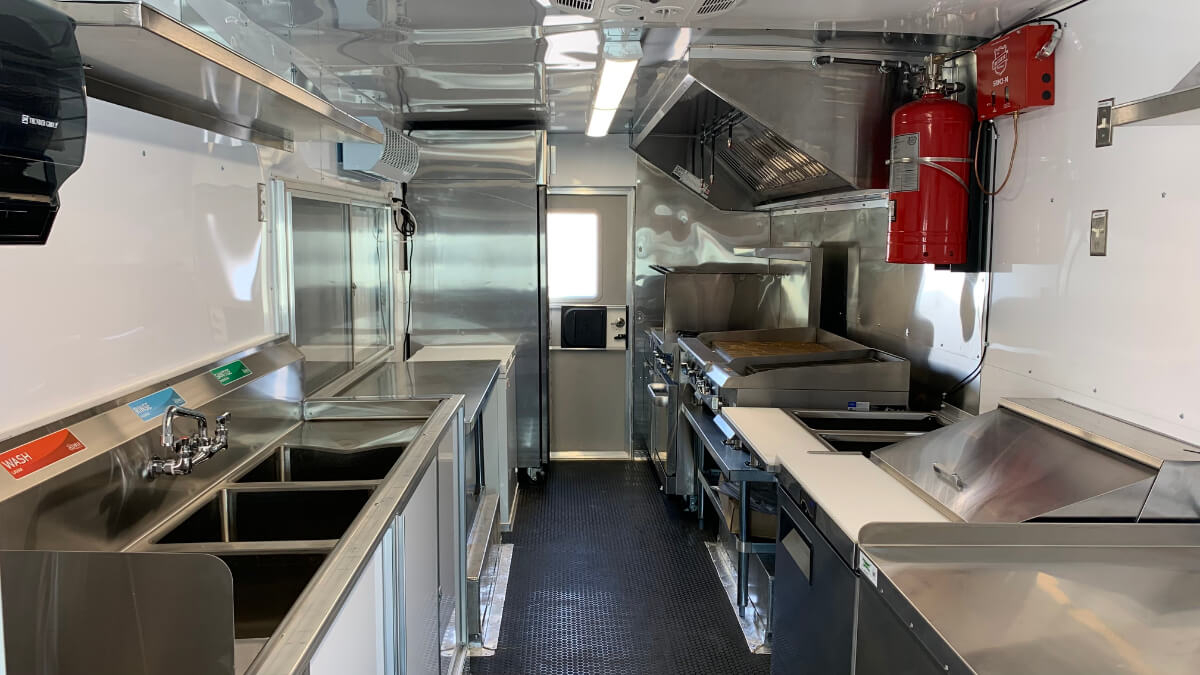
Green features work best engineered into the truck from the start, because the power system, weight distribution, and plumbing all depend on the equipment list. Retrofitting solar or a battery bank onto a truck built around a generator usually forces compromises on balance and capacity.
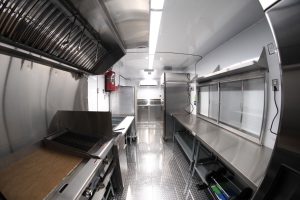
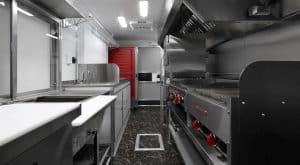
JRS builds every truck and trailer in-house in Houston with no subcontractors. The power, cooling, and water systems are sized to the operator’s menu and service pattern before fabrication starts.
A custom food truck build can be specified around solar, a battery bank, efficient appliances, and water conservation as one coordinated system rather than a stack of add-ons.
Conclusion
The features that make a food truck greener are the same ones that lower its fuel, power, and water bills, and battery power adds bookings a generator-only truck cannot reach.
The return is real but conditional, coming fastest for high-volume trucks in sunny regions running long days and slowest for gas-cooking trucks tied to shore power. The move that protects it is to settle the equipment list first, then size the power and water systems around it.